The Integration Tax You're Already Paying
I hear the same objection from managing partners every month: we're too invested in legacy systems to modernise without massive disruption.


I hear the same objection from managing partners every month: we're too invested in legacy systems to modernise without massive disruption.
The assumption underneath is that meaningful improvement requires wholesale replacement. Rip out the old infrastructure, install something new, retrain everyone, and hope it works.
But the evidence tells a different story.
The Real Cost Is Staying Put
Nearly 40% of legal professionals' time goes to administrative tasks that could be automated within the Microsoft ecosystem most firms already use. At average billable rates exceeding £250 per hour, that inefficiency costs thousands annually per employee.
You're already paying for disruption. You're just paying it in lost hours, manual workarounds, and staff frustration rather than in implementation fees.
Despite 89.2% of law firms depending on Microsoft for core productivity tools, only 2.4% report achieving seamless AI integration across applications. The foundation exists. Firms simply haven't connected the pieces.
Deployment Isn't Adoption
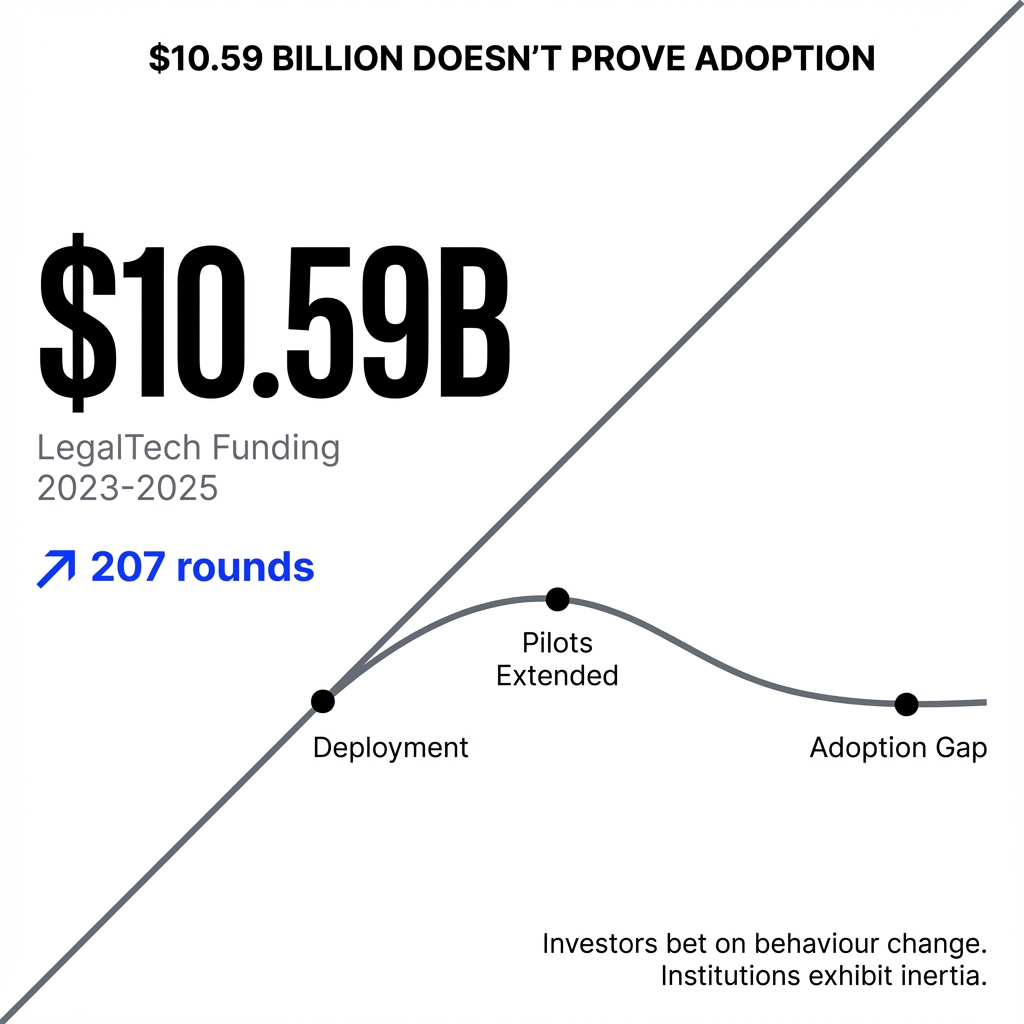
I've watched firms buy new software expecting operational transformation, only to find the inefficient workflows persist. Lawyers create workarounds. Adoption rates collapse. The firm never sees return on investment.
The problem isn't technical inadequacy. It's architectural misalignment with existing behavioural infrastructure.
The firms achieving measurable gains are not ripping out their infrastructure. They're identifying specific friction points, selecting technologies that address those points within existing workflows, and measuring success by adoption rather than deployment.
A small firm investing in case management software cut administrative work by 40%, saving 20 hours weekly. Streamlined processes helped them onboard three new clients within six months. They didn't replace their entire system. They addressed one friction point with a tool that embedded into existing habits.
The Gap Is Widening
The average firm juggles 5-10 different applications to manage operations. Only 41.2% report satisfaction with how these tools work together.
Firms with 51 or more lawyers show 39% generative AI adoption rates. Firms with 50 or fewer lawyers sit at approximately 20%. The competitive gap isn't about acquisition. It's about integration.
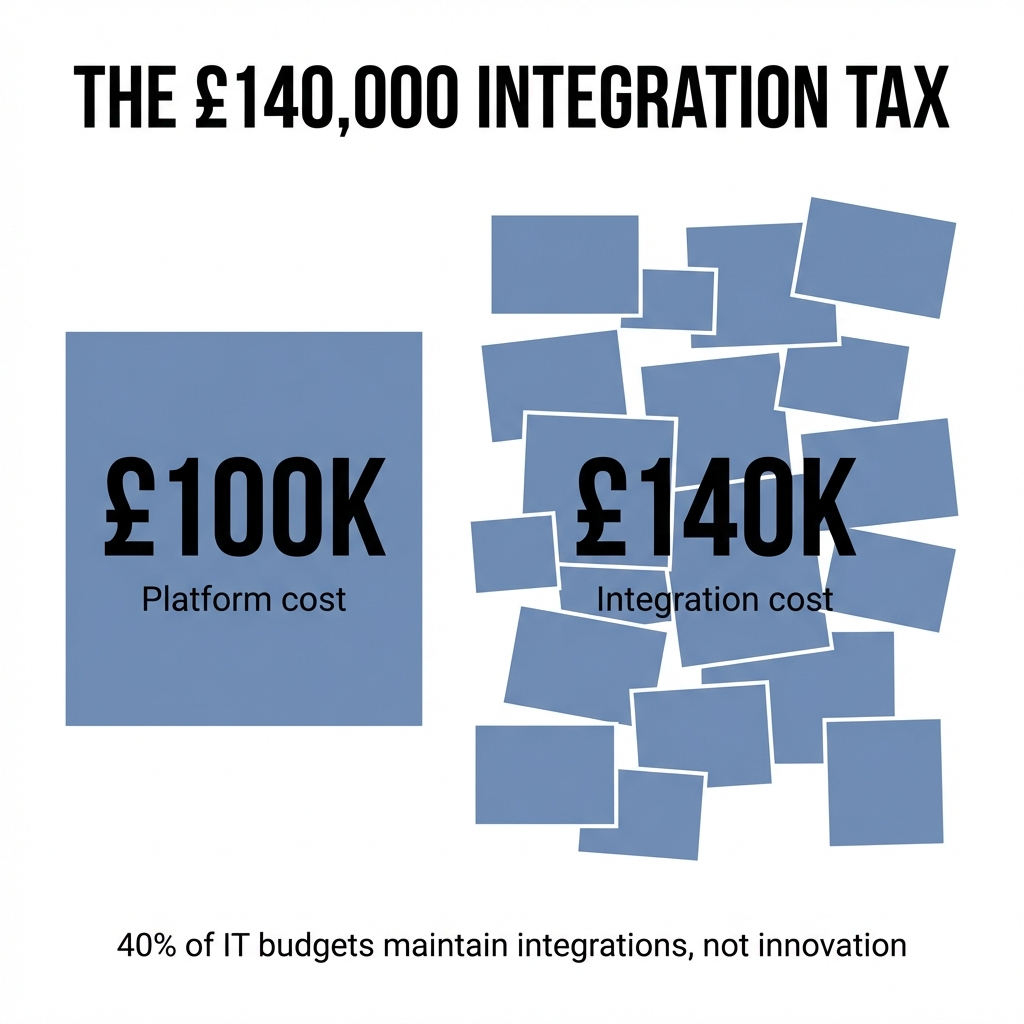
When asked what stopped firms from implementing new technologies, 19% cited the cost of switching. But older systems have increased failure rates leading to significant staff downtime. Manual operations and workarounds disrupt workflows, forcing fee-earners to waste billable time on repetitive processes.
The cost of switching versus the cost of not switching has inverted.
What Actually Works
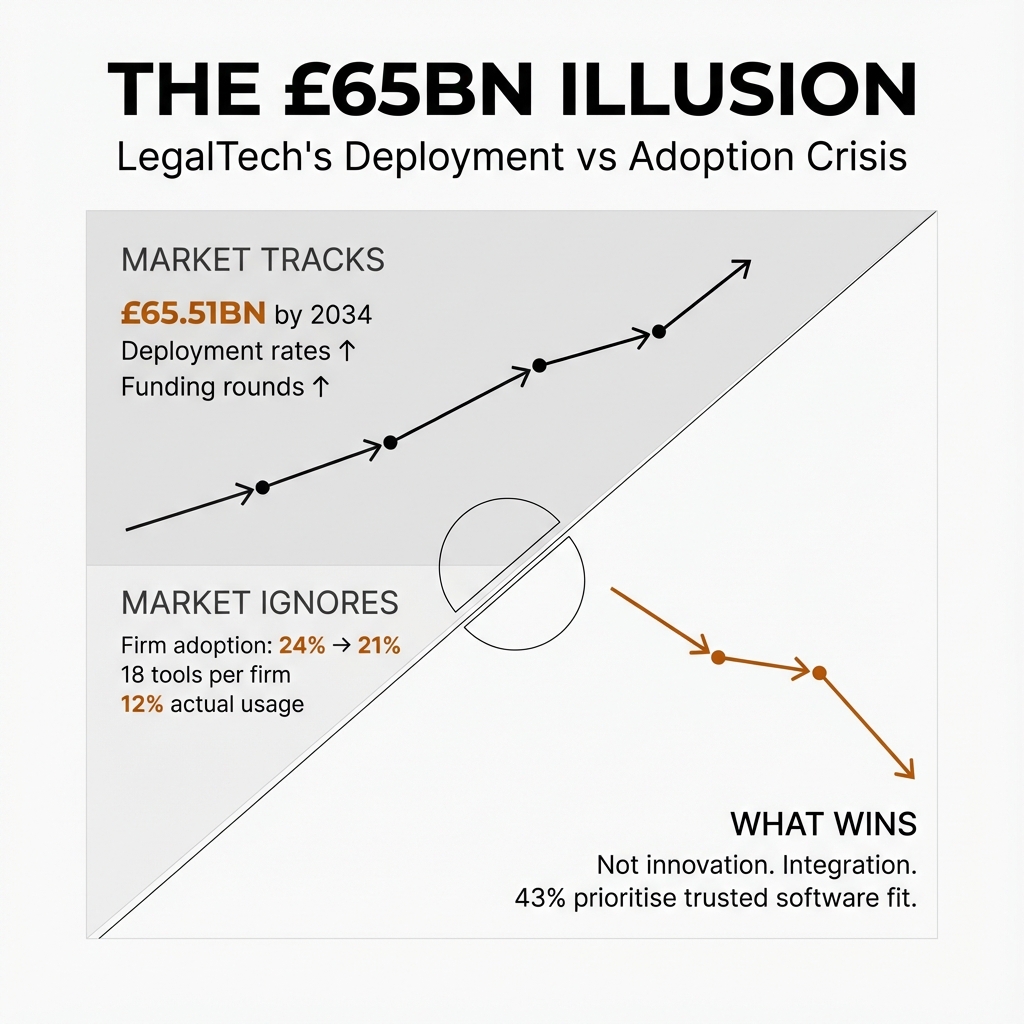
Firms achieving results focus on workflow friction, not feature lists. When considering investments in legal-specific generative AI tools, 43% of respondents prioritised integration with trusted software as the top reason. Another 33% highlighted the provider's understanding of their firm's workflows.
You don't need wholesale replacement. You need forensic identification of where existing systems create friction, followed by targeted solutions that embed within current behavioural patterns.
The question is not whether you can afford to modernise.
The question is whether you can afford to keep paying the integration tax whilst your competitors stop.